
Chimney Repair and Repointing in Ireland
Most leaks blamed on the roof are the chimney. What actually fails on an Irish stack, what the work costs in 2026, and how to tell repointing from a rebuild.
- Typical cost
- €400 to €900
- Access
- Scaffold or tower
- Usual culprit
- Flashing
Why Irish Chimneys Leak Before Irish Roofs Do
A chimney takes weather from every side. The roof around it has one exposed plane; the stack has four, plus a top. Wind-driven rain hits it from whichever direction the Atlantic is sending that week, and it dries slowly because there is masonry mass behind it holding moisture.
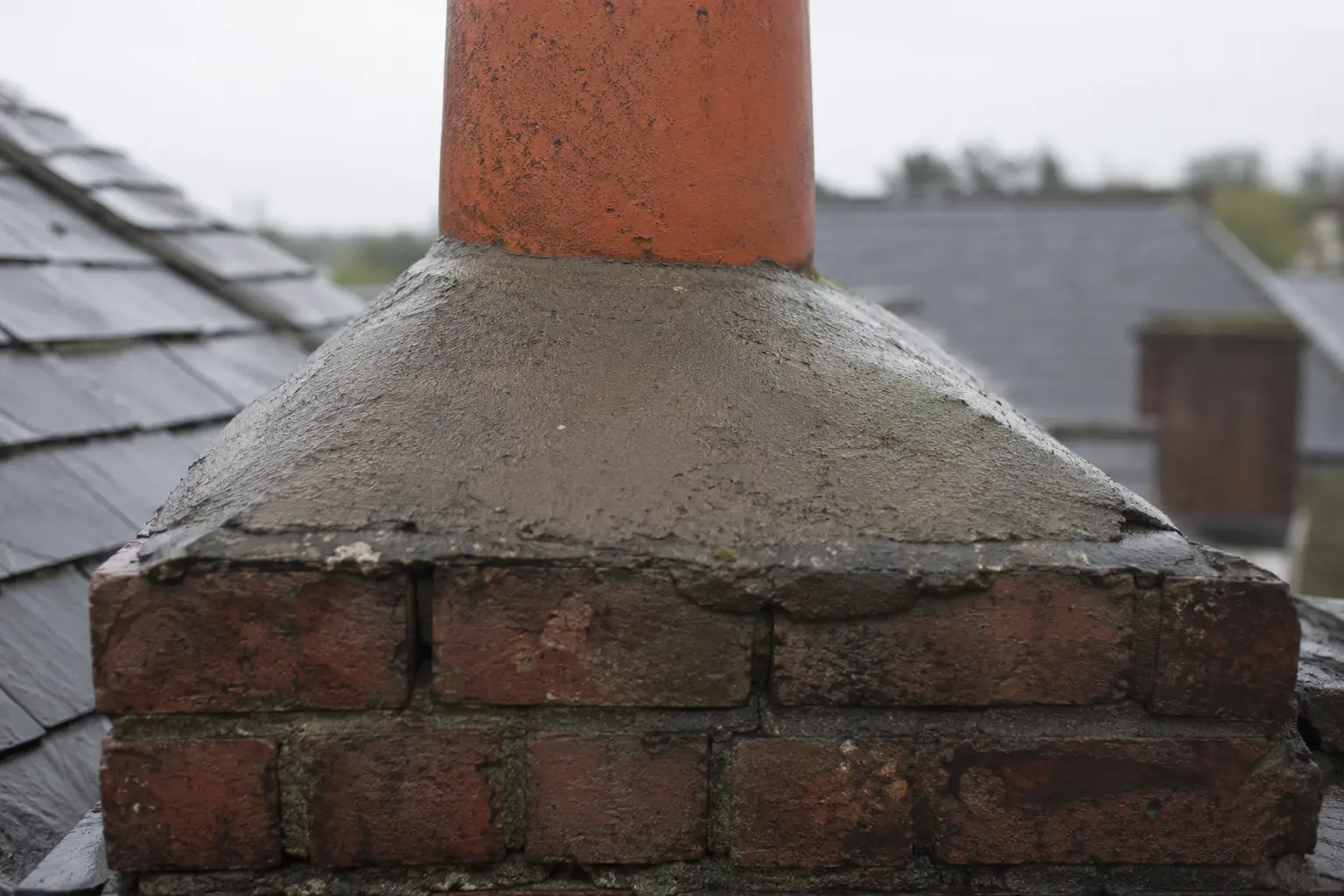
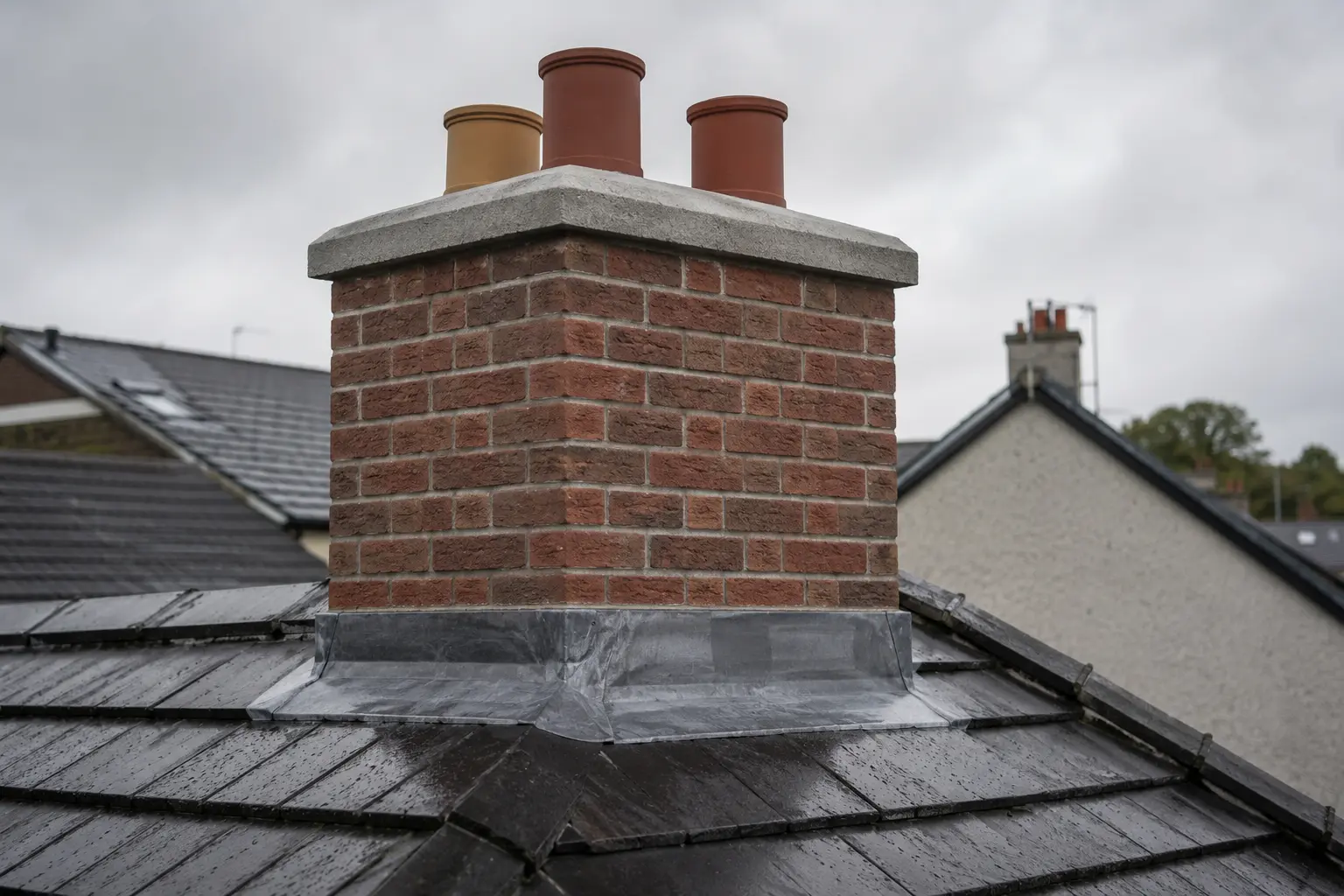
That means the three things holding water out of a stack all wear at different rates. The mortar between the bricks goes first, because it is meant to. The flaunching around the pots cracks as it expands and contracts. The lead flashing where the stack meets the slates lifts or splits where it was dressed too tight. Water that gets past any one of them runs down inside the stack and shows up as a damp patch on a bedroom ceiling, often a metre or more from the chimney breast itself.
Which is why a leak near a chimney is a chimney job far more often than it is a roof job, and why replacing slates around a stack that is still letting water in fixes nothing.
Find a Chimney Specialist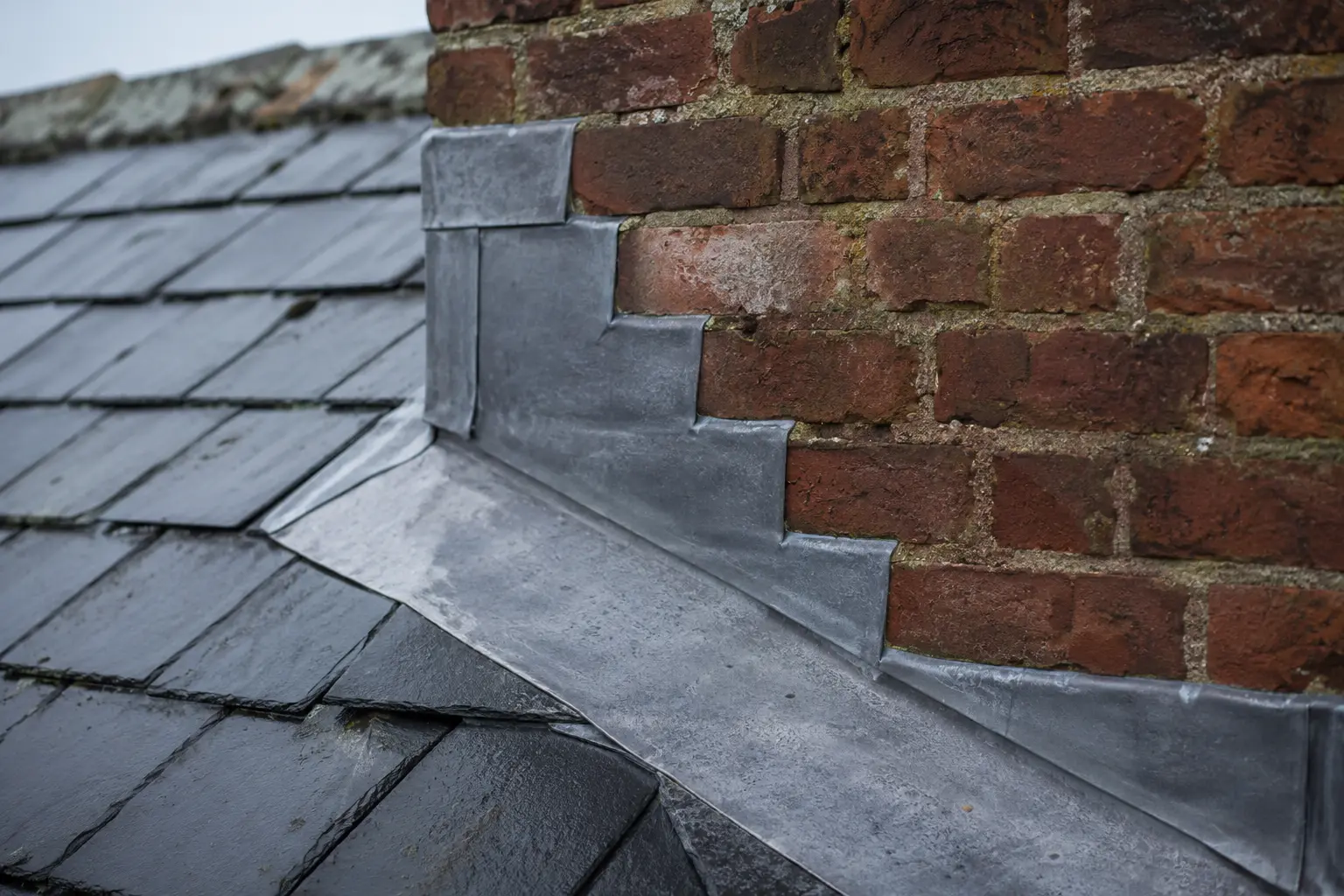
What the Work Actually Involves
Three stages, in the order they happen on the roof. If a quote does not separate the first one out, ask why.
Access First
A stack sits at the highest point of the roof, so nearly every job starts with scaffold or a mobile tower. It is the single biggest line on a small chimney quote, which is why it should be priced separately.
Priced as its own line
Rake Out and Repoint
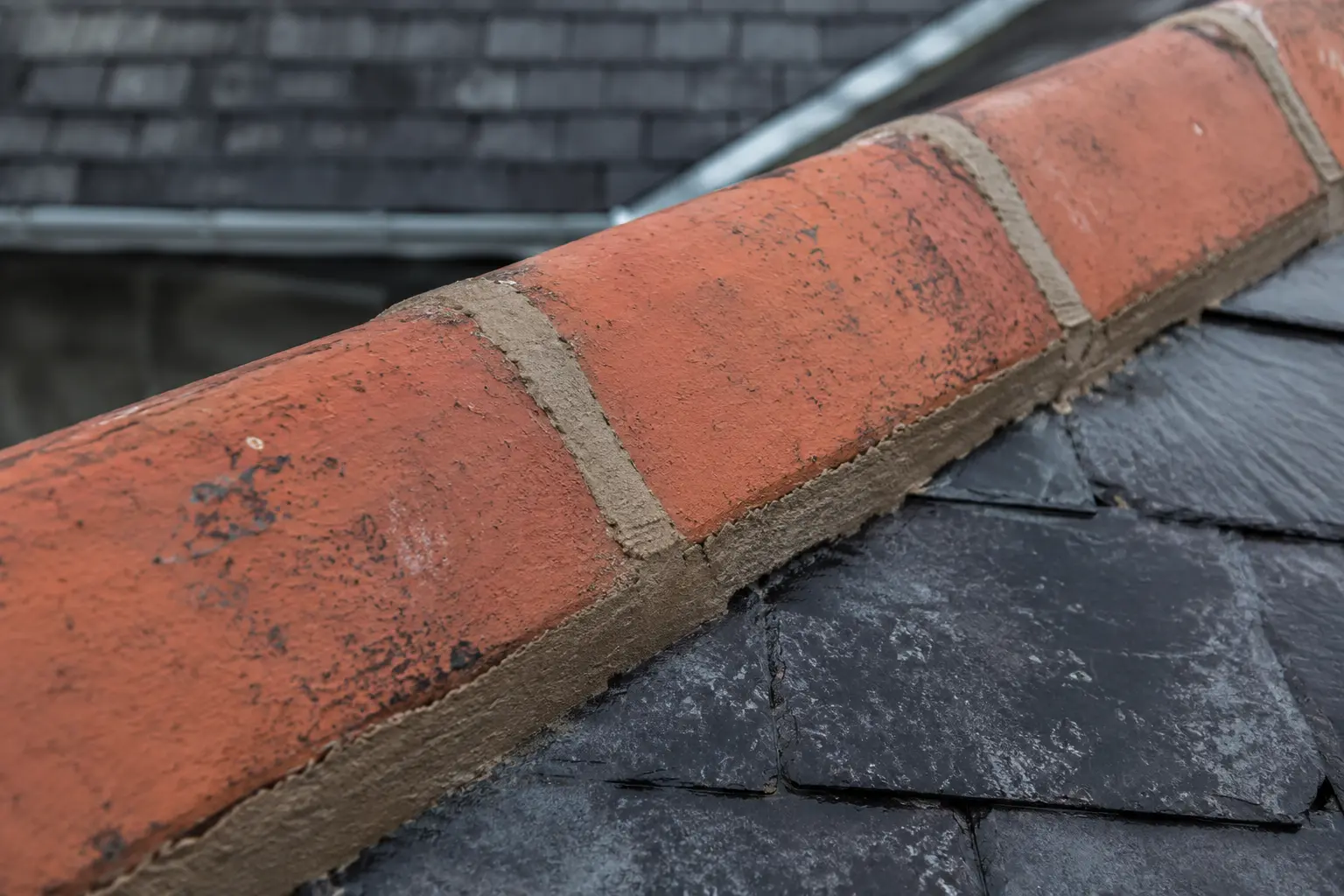
The failed mortar is raked out to a sound depth and the joints repointed. Colour and profile are matched to what is there, because a repointed stack that reads as new brickwork looks wrong on an older house.
€400 to €900
Flaunching, Pots and Lead
The flaunching is renewed around the pots, and the lead flashing, soakers and back gutter are replaced or re-dressed where they have lifted or split. This is the part that actually stops the leak.
Where leaks start
Five Signs Your Stack Needs Attention
Any one of these is worth an inspection. Two or more and the stack is already losing water into the house.
- 01
A Damp Patch on the Chimney Breast
Usually the first sign, and usually mistaken for a roof leak. Water gets past the flashing or the flaunching, runs down inside the stack and appears on a bedroom ceiling or the wall beside the fireplace.
- 02
Loose or Missing Mortar You Can See From the Ground
If the joints look recessed or you can see gaps between the bricks from the garden, the pointing has already failed. Mortar is the sacrificial layer: it is meant to go before the brick does.
- 03
Cracked Flaunching or a Tilted Pot
The flaunching is the mortar fillet that beds the pots. Once it cracks, water runs straight down the outside of the flue, and a pot that looks off-square is usually sitting in flaunching that has let go.
- 04
Staining on the Slates Below the Stack
Dark streaking or moss concentrated directly under the chimney means water is running off the stack rather than being thrown clear by the flashing.
- 05
Debris in the Fireplace After Wind
Grit and mortar crumbs in the hearth after a windy night are pieces of the stack. Worth an inspection before more of it comes down.
What Chimney Work Costs in 2026
Ranges, not quotes. Stack height, how much mortar has gone and whether scaffold is already up move every one of these.
Chimney and Related Work
Guide prices from our 2026 roofing cost tables.
Scaffold is the biggest variable on a small chimney job, so if any other roof work is due, having it done on the same access is the single easiest saving available.
See the Full 2026 Cost GuideCommon Questions
How much does chimney repointing cost in Ireland?
Chimney repointing and flashing work typically runs from about EUR 400 to EUR 900 as a 2026 guide, depending on the height of the stack, whether scaffold or a tower is needed for safe access, and how much of the mortar has failed. A full rebuild above roof level costs more and is quoted after an inspection. Get the price in writing rather than over the phone.
Do I need scaffolding to repoint a chimney?
Usually yes. A chimney stack sits at the highest point of the roof, so most roofers will price for scaffold or a mobile tower to work safely and to avoid walking on slates. If scaffold is already up for other roof work, having the chimney done at the same time saves paying for access twice.
Is a leak near the chimney always the chimney itself?
Not always. Water can track along a rafter and appear well away from where it got in, and failed flashing, a blocked back gutter or a cracked slate beside the stack can all produce the same stain. A roofer will check the flashing, the flaunching and the slates around the stack together before deciding what needs doing.
Can I repoint a chimney myself?
It is not a sensible DIY job. The work is at the highest point of the roof, it needs safe access rather than a ladder against the gutter, and raking out and repointing to the right depth and mix is a trade skill. Bad pointing traps water in the brick instead of shedding it, which does more damage than the failed mortar did.
Should I repoint or rebuild the stack?
If the mortar has failed but the bricks are sound, repointing is the job. If the brick faces have spalled and are crumbling, or the stack is visibly leaning, the section above roof level usually needs rebuilding. A roofer should tell you which of the two you have after looking at it, and be able to show you why.
What if the chimney is no longer used?
A disused stack still needs to keep water out, and it still has flashing and flaunching that can fail. The options are to maintain it as it is, cap the pots while keeping ventilation so the flue does not sweat, or take the stack down to roof level and slate over. Each is a different price, so ask for the choice to be quoted rather than assumed.
Get the Stack Looked At
A chimney is not a job to price over the phone, because nobody can see the flaunching from the road. Get someone up on it, get the finding in writing, then decide between repointing and a rebuild.