Roof Replacement in Ireland: A Step-by-Step Guide

The biggest job a house ever needs, and mostly made of things you never see. What tells you the roof is finished, what happens day by day, and what the regulations oblige you to do while it is open.

On site
5 to 7 days
Scaffold
€800 to €2,000
Slate lasts
80 to 150 years

Signs You Need a Full Replacement

Age is the most reliable indicator. Concrete tile roofs over 40 to 50 years old, felt flat roofs over 20 years old, and slated roofs showing widespread nail sickness are all strong candidates for replacement. Nail sickness occurs when the copper or zinc fixing nails corrode over decades and lose their grip: slates begin to slip across the roof rather than in isolated spots, and the problem accelerates once it begins.

A professional roof survey, costing €150 to €300, is money well spent before committing to replacement expenditure. An experienced roofer or structural surveyor can assess the covering, underlay, battens and structure from both above and inside the attic and give you an objective view of the remaining lifespan.

  • Concrete tile over 40 to 50 years old
  • Felt flat roof over 20 years old
  • Widespread nail sickness, slates slipping across the roof
  • Several leaks appearing in different areas at once
  • Felt underlay visibly perishing from inside the attic
  • A sagging ridge or bowing rafters
  • Repeated patching in the same spots with no lasting result
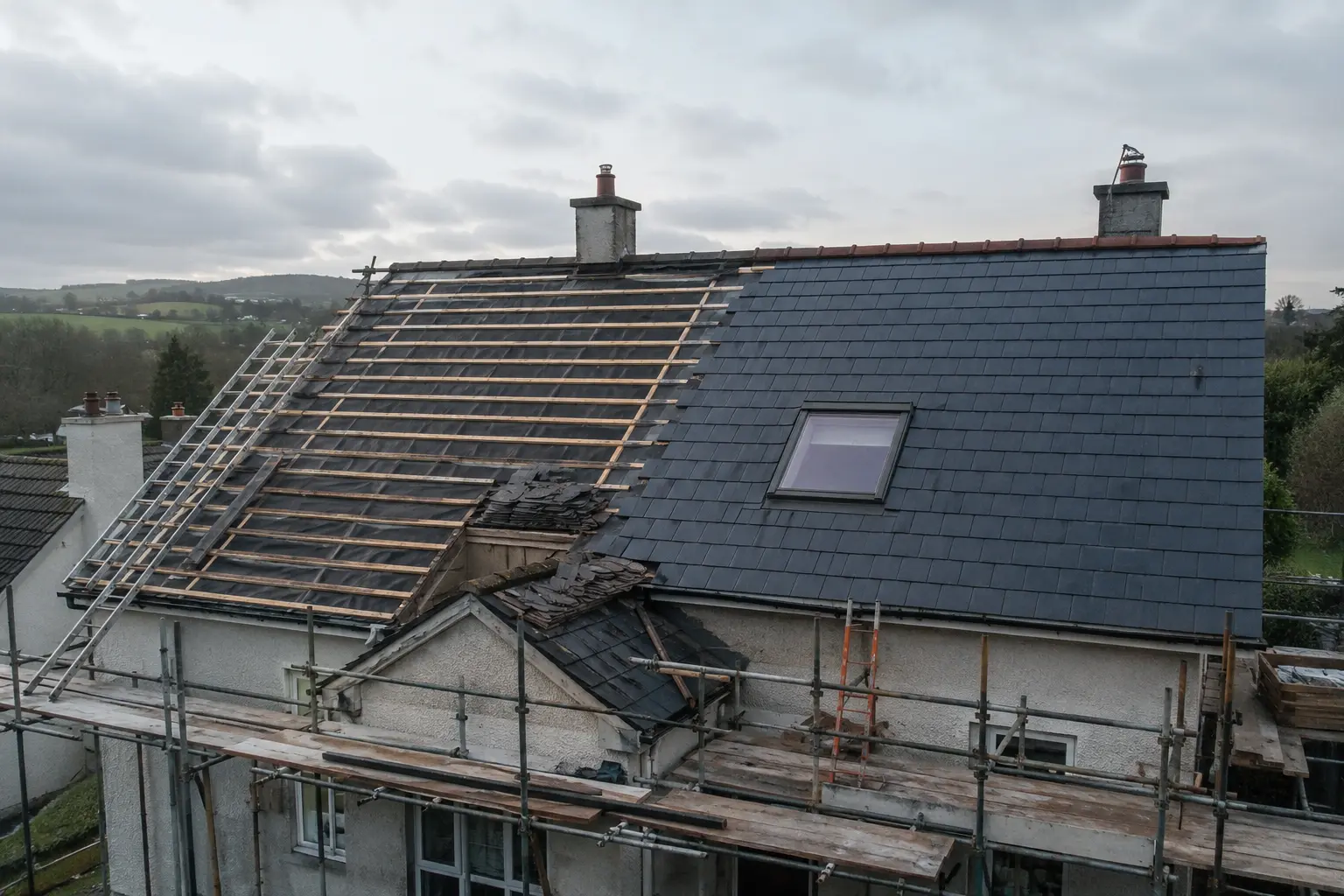
Scaffold erected around a house for a full re-roof
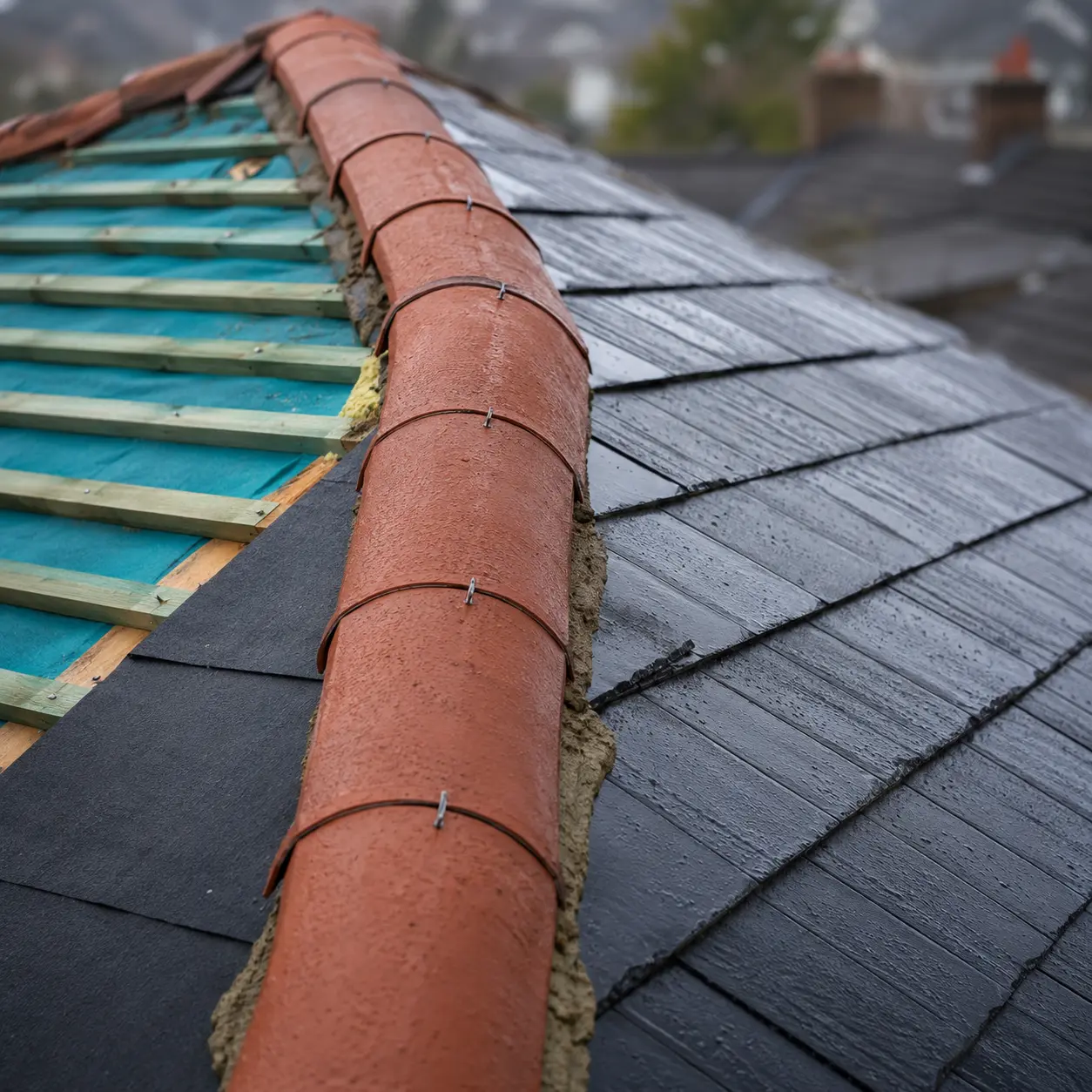
A roof stripped back to the rafters
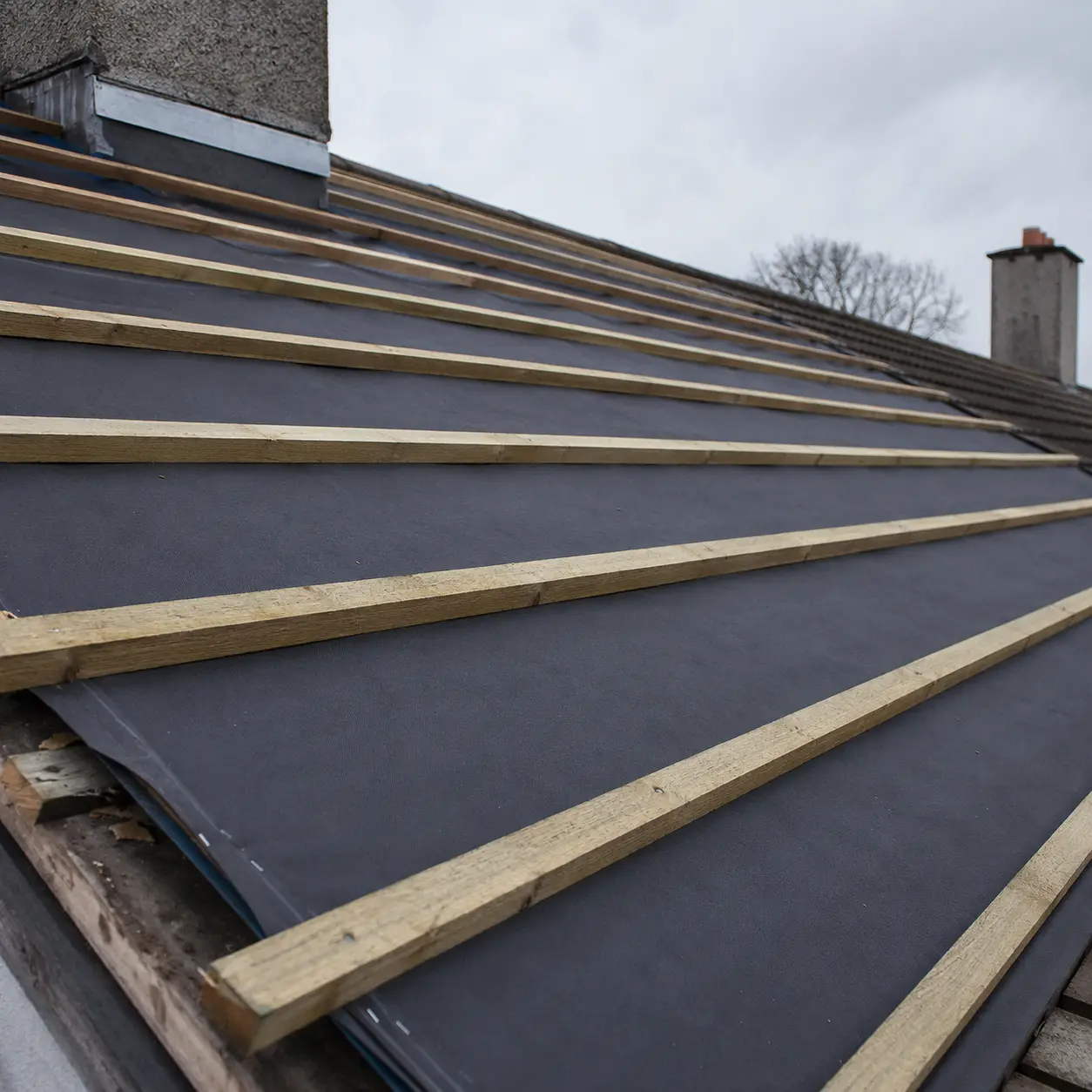
New battens and breathable felt being laid
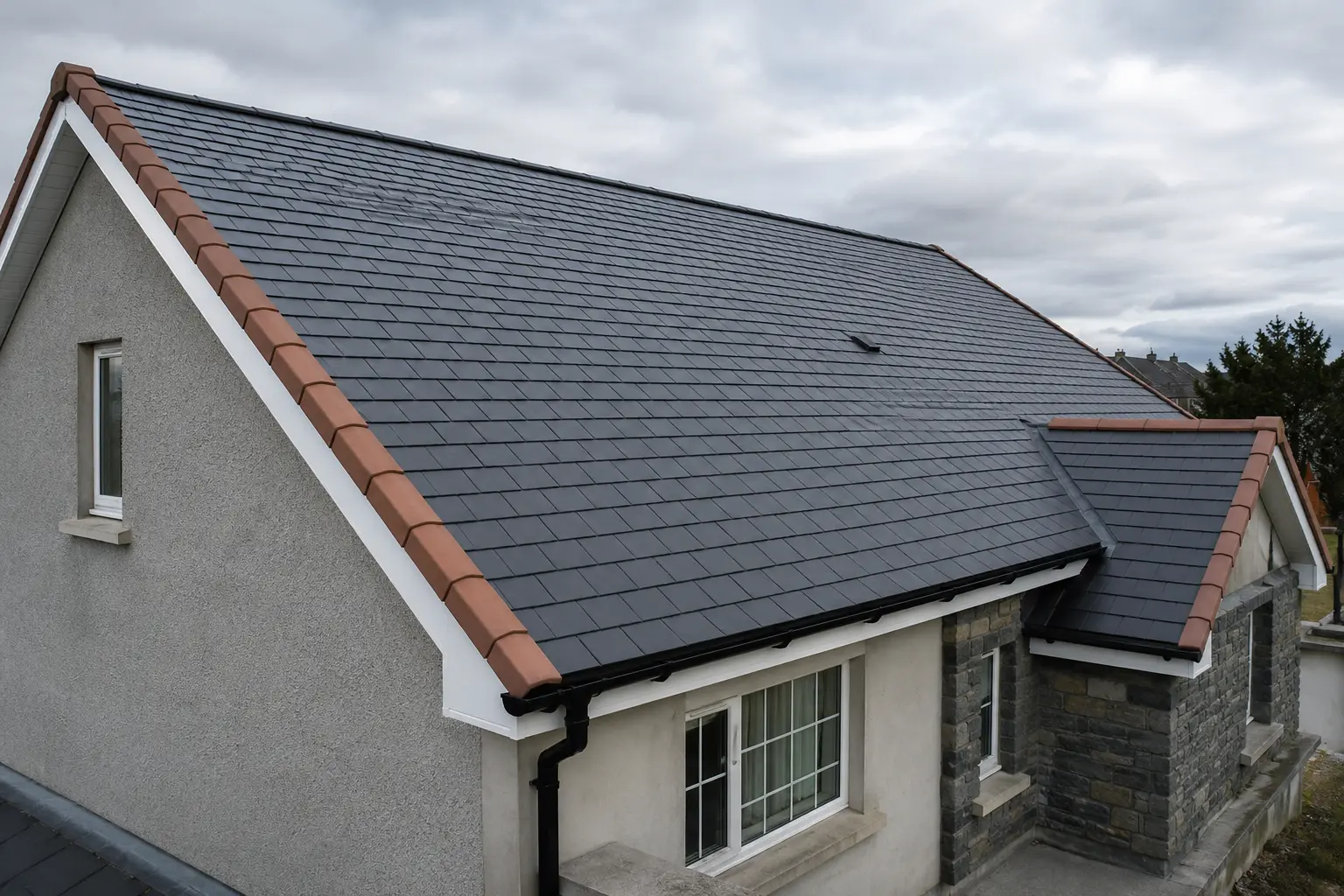
A completed new roof on an Irish house

Choosing What Goes Back On

Three considerations, and the third one is the one people forget until the neighbours mention it.

Natural Slate

80 to 150 years

The best long-term value for Irish homes, and the appropriate material for period and Victorian properties, conservation areas and any building in a historic streetscape. A slate roof laid today may still be in service in 2100. The higher upfront cost is offset by a much longer replacement cycle and the fact that slate can be salvaged and reused.

Concrete Interlocking Tile

40 to 60 years

Well suited to post-1950s housing, 1970s and 1980s estates and modern extensions. Lower cost than slate, faster to install and available in a wide range of profiles and colours. A practical choice where budget is the primary consideration.

Matching What Is There

Kerb appeal

On a street where neighbouring houses share a roof type, matching it supports kerb appeal and attracts less planning scrutiny. Replacing concrete tile with natural slate is generally exempt development, but if the roof form or structure is changing too, check with your local authority before work starts rather than after.

Scaffold Is Not Optional

All full roof replacements require scaffold. This is not a preference: it is a legal requirement under Irish health and safety legislation, the Safety, Health and Welfare at Work (Construction) Regulations, and any contractor who proposes to do a full re-roof without scaffold is operating outside the law and without insurance cover. Do not agree to work without scaffold regardless of how the cost saving is presented.

Scaffold for a standard semi-detached house typically costs €800 to €2,000 depending on house size, height and how long it needs to remain in place. Most roofers include it, but confirm that in writing before work starts: some quotes exclude scaffold and add it as a separate line later, which makes the initial figure look more attractive than it is.

It goes up the day before work begins and comes down one to two days after completion, so it is usually in place for two to three weeks in total.

What Happens, Day by Day

Five to seven working days on a standard three-bedroom semi, from stripping to the last flashing. You can stay in the house throughout; the interior is not affected.

Scaffold Up

Erected the day before work begins. Not optional and not negotiable, for the reason set out below.

Day one

Strip to the Rafters

The existing covering comes off down to the rafters or deck, and any rotten timber is dealt with while it is open.

Day two

Felt, Battens, Covering

Breathable sarking felt laid eaves to ridge with overlaps at each course, new treated battens at the correct gauge, then slates or tiles from the eaves up.

Days three to seven

Insulation, Grants and Part L

A full roof replacement is the optimal time to upgrade attic insulation, because the scaffold is already in place and the attic is accessible. The SEAI Warmer Homes scheme provides fully funded insulation upgrades for qualifying homeowners, generally those in receipt of certain social welfare payments. Eligibility rules and the measures covered are set by SEAI and change from time to time, so check whether you qualify on seai.ie rather than assuming either way.

The SEAI Home Energy Upgrade scheme covers attic insulation as part of a broader whole-house upgrade, and attic insulation can also be grant-aided on its own. The amount is a fixed sum set by the type of home you have, and SEAI revises it from time to time, so check the current figure on seai.ie rather than budgeting from a number quoted anywhere else. Both schemes require a registered SEAI contractor. A new, sound roof is also the ideal base for roof-mounted solar, which carries its own grant, so it is worth talking to installers before the scaffold comes down.

Ask These Before You Sign Anything

Get written answers to all seven. A confident, professional roofer will have no difficulty with any of them.

  1. 01Are you fully insured, including public liability cover of at least €2 million?
  2. 02Will you provide a written, itemised quote specifying materials by brand and specification?
  3. 03Is VAT included in the price?
  4. 04Will scaffold be erected, and is it included in the quote?
  5. 05What is the payment schedule? Avoid paying more than 30 per cent up front.
  6. 06What guarantee do you offer on workmanship, and is it in writing?
  7. 07Are you a member of CIRI, the Construction Industry Register Ireland?

Hesitation on insurance or VAT, reluctance to provide a written contract, or pressure to agree a start date before a written quote is provided are all warning signs that deserve serious consideration before any money changes hands.

Common Questions

How do I know if I need a new roof rather than a repair?

Age is the most reliable indicator. Concrete tile roofs over 40 to 50 years old, felt flat roofs over 20 years old, and slated roofs showing widespread nail sickness are all strong candidates. Other signs are several leaks in different areas at once, which suggests widespread underlay failure rather than a single point failure, felt visibly perishing in the attic, a sagging ridge or bowing rafters, or a history of patching the same spots with no lasting result.

How long does a full re-roof take?

For a standard three-bedroom semi-detached house, typically five to seven working days from stripping to completion of ridge, valleys and flashings. Scaffold goes up the day before and comes down one to two days after sign-off, so it is usually in place for two to three weeks in total. Expect noise during working hours, because stripping and nailing is loud and unavoidable, and attic access will be limited. The interior is not affected and you can stay in the house throughout.
Do I really need scaffolding for a re-roof?

Yes, and it is not a matter of preference. Scaffold is a legal requirement under the Safety, Health and Welfare at Work (Construction) Regulations, and any contractor proposing a full re-roof without it is operating outside the law and without insurance cover. Do not agree to work without scaffold regardless of how the saving is presented. It costs about EUR 800 to 2,000 for a standard semi-detached house depending on size, height and how long it stays up.

Should I insulate the attic at the same time?

You will probably have to. Under Part L of the Building Regulations, replacing a large enough share of the roof covering triggers a requirement to bring the thermal performance of the roof up to current standards, which for most full re-roofs means upgrading the attic insulation. It is also the cheapest time to do it, with the scaffold up and the attic accessible. Your roofer should know whether your job triggers Part L and what it needs; if they do not, raise it before work begins.

Are there SEAI grants for a new roof?

Not for the covering itself. Grants apply to insulation, so insulation work done at the same time as a re-roof can qualify. Attic insulation can be grant-aided on its own or as part of a broader home energy upgrade, and the amount is a fixed sum set by the type of home you have. Homeowners in receipt of certain social welfare payments may instead qualify for the Warmer Homes scheme, which is fully funded. Both routes need a registered SEAI contractor, and the amounts and eligibility rules change, so check the current position on seai.ie before you budget.

What should I ask a roofer before signing anything?

Get written answers on insurance including public liability of at least EUR 2 million, a written itemised quote naming materials by brand and specification, whether VAT is included, whether scaffold is included, the payment schedule, the workmanship guarantee in writing, and CIRI membership. A professional roofer answers all of it without difficulty. Hesitation on insurance or VAT, reluctance to put the contract in writing, or pressure to agree a start date before you have a written quote are all warning signs.

One Roof, Once, Done Properly

A re-roof is the one job where cutting the wrong corner is invisible for a decade and then very expensive. Get three written quotes, check the insurance, and do not let anyone skip the scaffold.

All 26 CountiesFind a Re-Roofing Contractor563 rated contractors, each shown with its real Google rating and a phone number. Free to contact, no booking fee.Browse Local Roofers