
Roof Repairs in Ireland: What to Expect
Most calls to a roofer are a repair, not a new roof. What actually leaks on an Irish roof, what each job costs, and the point at which patching stops paying.
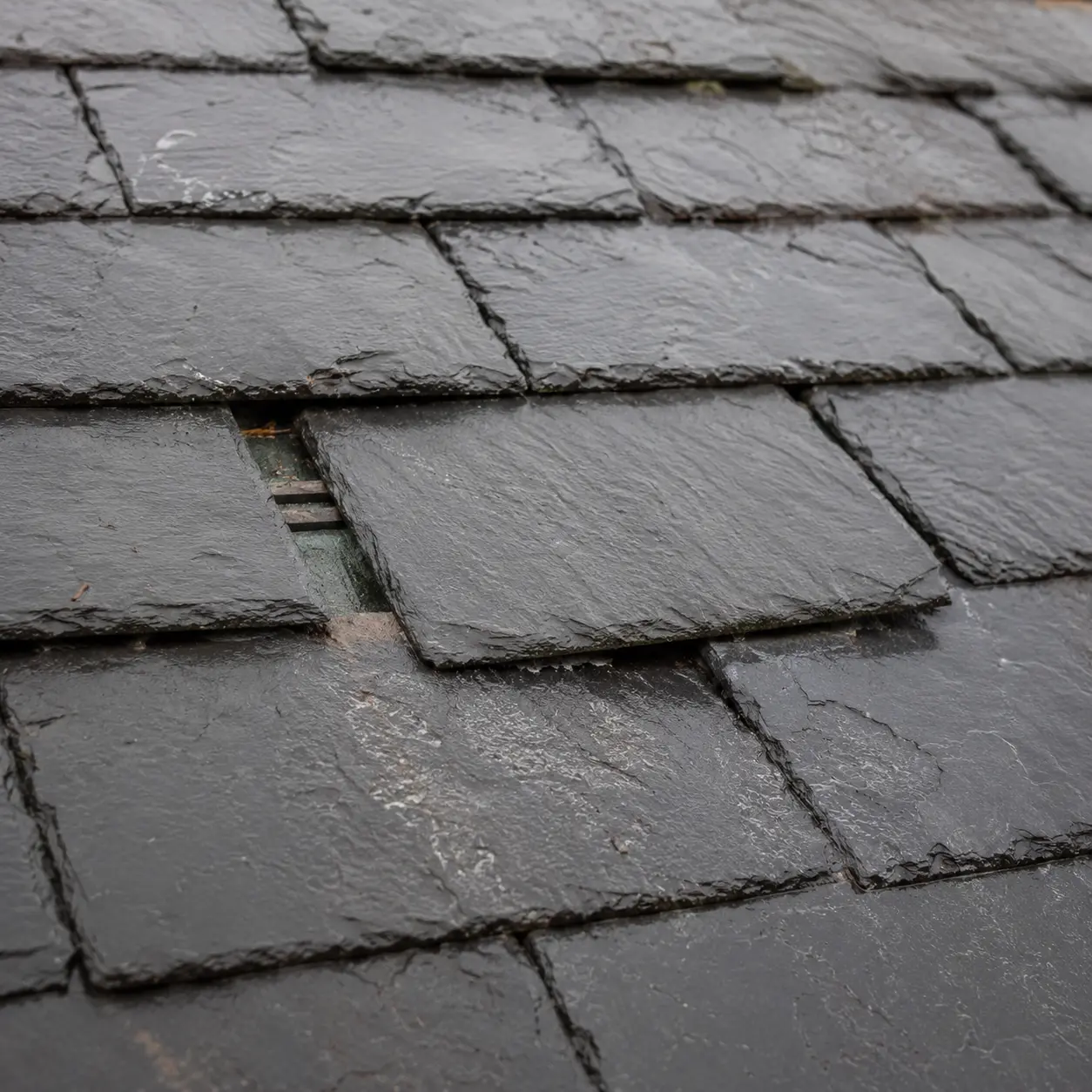
- Slipped slates
- €80 to €200
- Emergency call-out
- €200 to €400
- Most common cause
- Failed flashing
Common Causes of Roof Leaks in Ireland
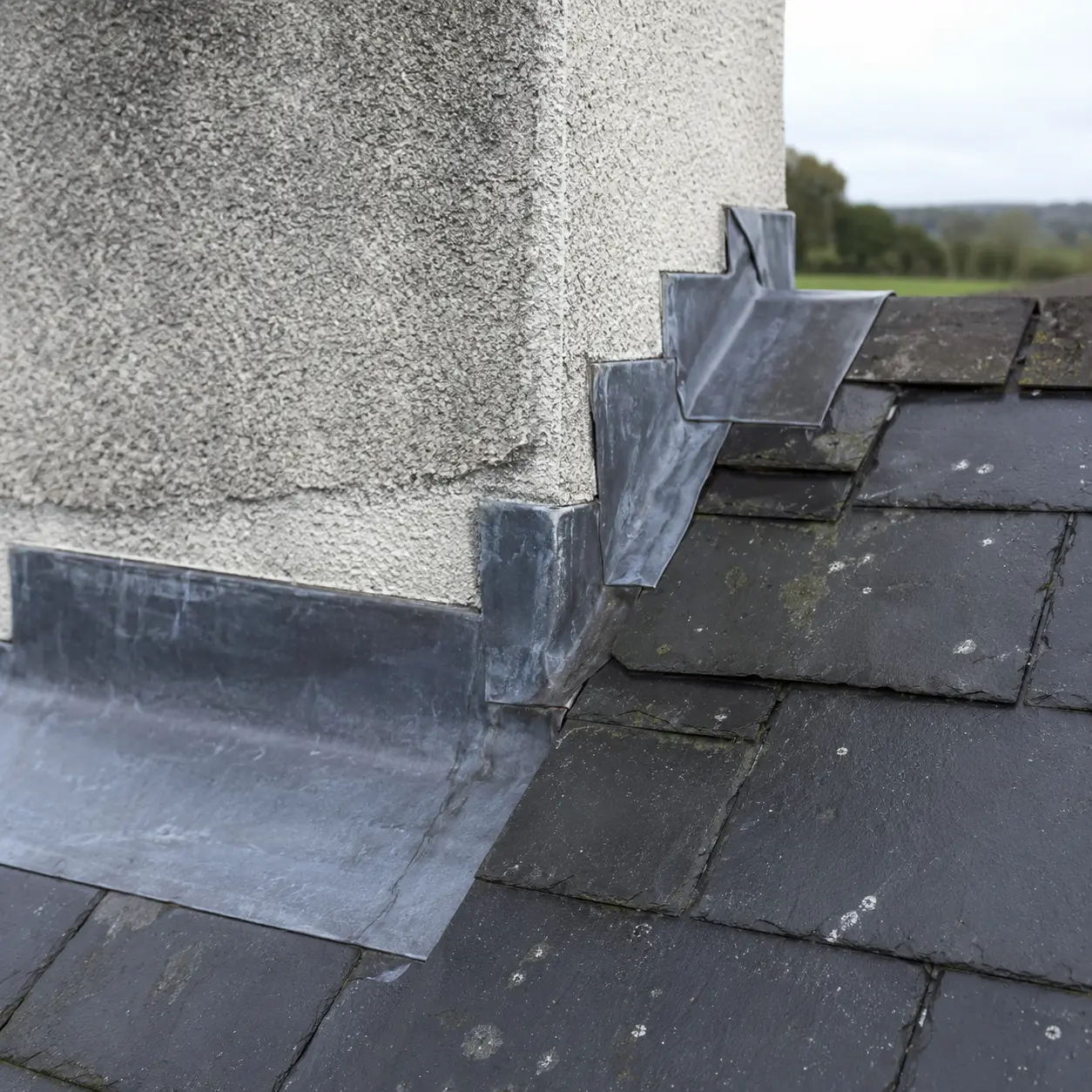
The majority of roof leaks in Ireland come from a small number of recurring causes. Failed or cracked lead flashing at the chimney, around skylights or along valleys is very common: lead hardens over decades and develops hairline cracks that allow water in during heavy rain. Slipped, cracked or missing slates are the most frequent single cause of a new leak, particularly after a stormy winter.
Blocked gutters are an underappreciated cause: when gutters overflow, water backs up under the eaves and can penetrate between the felt and the fascia board. Perished felt underlay, common on homes built in the 1960s, 1970s and 1980s, fails gradually and allows water through in multiple places simultaneously. Failed pointing at ridge tiles, especially after a hard frost, is another reliable source of water ingress.
The Irish climate, with its persistent wind-driven rain arriving from the south-west for much of the autumn and winter, makes flashings particularly vulnerable to fatigue over time.
Find a Repair Contractor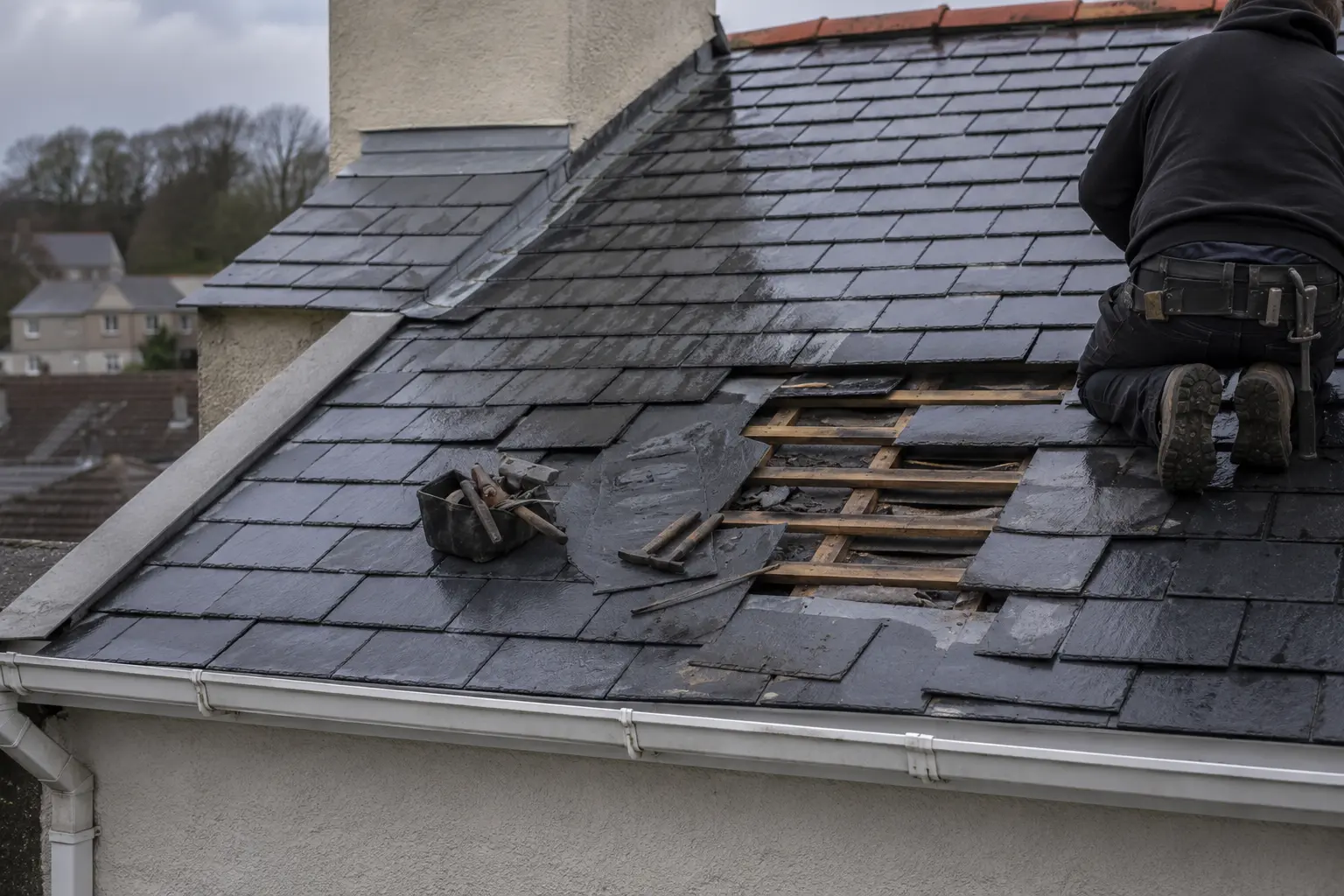
If the Water Is Coming In Now
Storm damage sometimes needs immediate action to keep water out of the building. In this order, and not in a different one.
Stay Off the Roof
Do not climb onto a wet or structurally compromised roof. The risk of injury is severe and you can easily make the damage worse. If a rafter has cracked or a large section of covering has lifted, contact your insurer immediately.
Never in the wet
Photograph Everything First
Take photographs of all visible damage from the ground and from inside the attic BEFORE any temporary repair is made. These images support an insurance claim and help the roofer scope the permanent repair accurately.
Before the tarp goes on
Get a Make-Safe
A temporary tarp or emergency patch limits the damage until a permanent repair can be arranged. Most Irish contractors offer an emergency call-out, typically covering a temporary fix and an assessment of the full repair needed.
€200 to €400
What Each Repair Costs
Repairs are priced per job rather than per square metre, which is why they are far more predictable than a full re-roof.
Repair Jobs, Priced
The jobs Irish roofers are called out for most.
Guide prices for 2026, not quotes. Smaller jobs price more predictably than a full re-roof, but access and county still move the figure. Any roofer will quote a repair free of charge.
The Full 2026 Cost GuideWhen Patching Stops Paying
The two lists a roofer weighs against each other. If you are reading more of the right-hand column than the left, you are paying to postpone a re-roof.
Repair Is the Right Call
- The roof is under 25 years old
- Fewer than 10 to 15 per cent of slates are affected
- The roof structure is sound
- The felt underlay is still serviceable
- Damage is localised rather than across the whole slope
Replacement Is Warranted
- Nail sickness is widespread rather than in isolated pockets
- Active leaks are appearing in several different areas
- The felt underlay has visibly perished, torn or crumbling in the attic
- The roof is over 30 years old and has never been significantly maintained
- You are patching the same roof every winter
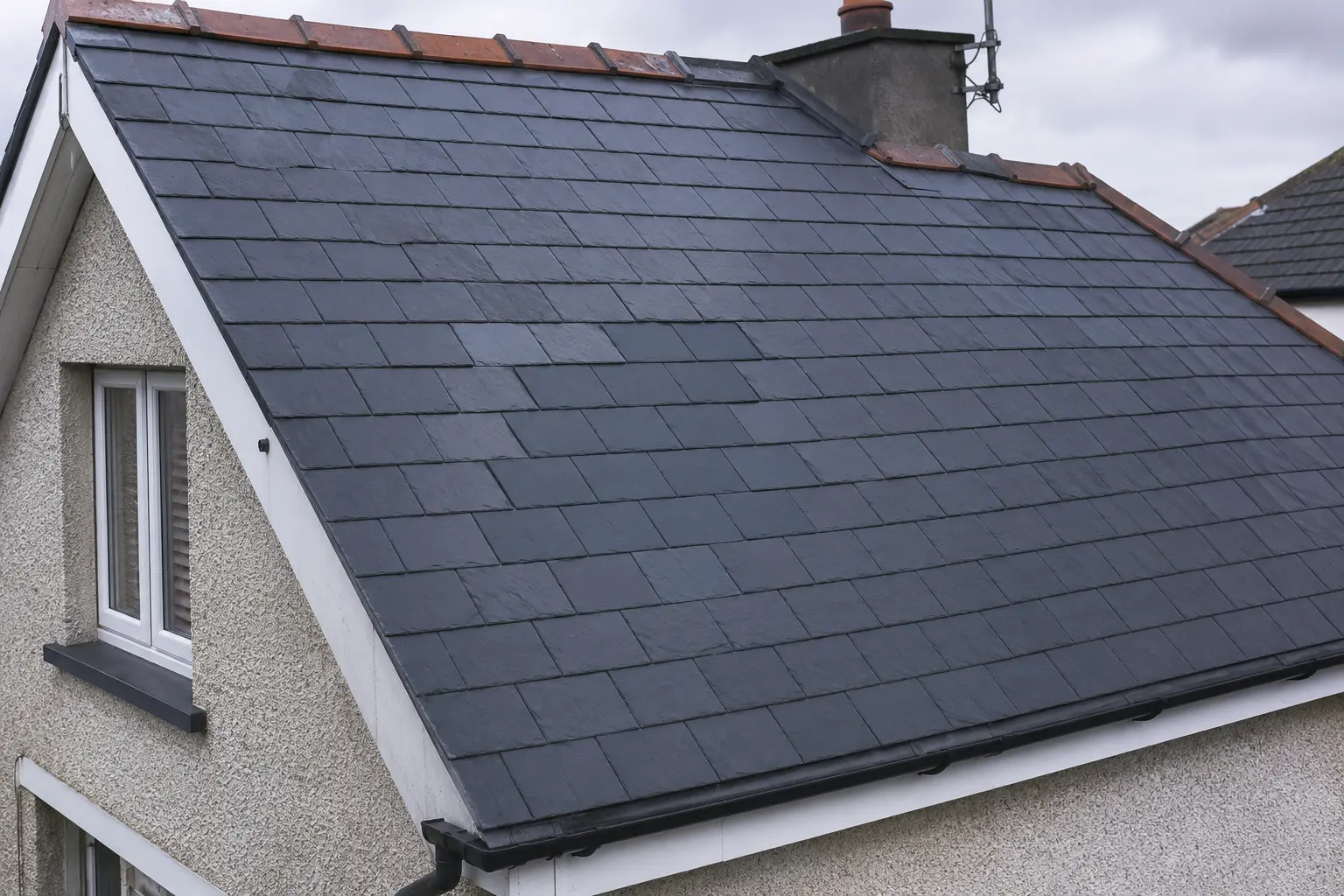
Repeatedly patching a failing roof is a false economy. Each repair costs €250 to €600 or more and the underlying condition keeps deteriorating, so over five years the cumulative cost often exceeds the full replacement that would have solved it once. On any roof over 30 years old, a survey at €150 to €300 is worth commissioning before you commit to major repair spend.
Storm Damage and Insurance Claims
Named storms from Met Éireann, particularly the winter Atlantic storms that cross Ireland each year, can cause significant roof damage and are commonly covered by home insurance policies. Document all damage thoroughly with photographs before any temporary repairs: this is essential for an insurance claim.
Your insurer may dispatch a loss adjuster to inspect the damage before authorising repair work. This process can take several days, during which a temporary covering should keep the house watertight. When the insurer approves the repair, use a registered, VAT-registered roofer and keep all invoices and guarantees: some insurers will not pay for cash-in-hand work without a proper invoice, and any dispute about the quality of work requires a paper trail.
Keep a copy of the agreed scope of repair from the adjuster and ensure the completed work matches it.
Common Questions
How much does it cost to fix a roof leak in Ireland?
It depends entirely on what is leaking. Replacing a few slipped or cracked slates is about EUR 80 to 200 for a visit including materials. Repointing a chimney stack is EUR 400 to 900, replacing lead step and cover flashing EUR 300 to 600, and a flat roof patch repair EUR 250 to 600. Repointing a full ridge runs EUR 600 to 1,500. An emergency storm call-out is EUR 200 to 400 and covers a temporary fix plus an assessment of what the permanent repair needs.
What is nail sickness, and why does it mean a new roof?
Nail sickness is when the copper or zinc nails holding the slates to the battens have corroded and are no longer gripping, while the slates themselves are often still sound. Slates start slipping in ones and twos right across the roof rather than in one spot. It is progressive and it gets worse, so once a roofer identifies it, widespread slippage will follow and a full re-slate is usually the more economical decision than continuing to patch.
Should I repair my roof or replace it?
Repair is the right call when the roof is under 25 years old, fewer than 10 to 15 per cent of slates are affected, the structure is sound and the felt underlay is still serviceable. Replacement is warranted when nail sickness is widespread, leaks are appearing in several different areas, the underlay has visibly perished, or the roof is over 30 years old and has never been significantly maintained. Repeatedly patching a failing roof is a false economy: over five years the cumulative cost often exceeds a full replacement.
Is a professional roof survey worth paying for?
On a roof over 30 years old, yes. A survey costs about EUR 150 to 300 and a surveyor can assess the structure, underlay, fixings and covering from both above and inside the attic. That gives you an objective view of whether repair or replacement is the better investment before you commit to significant expenditure, which is worth far more than the fee if it stops you patching a roof that needs replacing.
Does home insurance cover storm damage to a roof?
Named storms from Met Eireann commonly are covered, and the winter Atlantic storms that cross Ireland each year cause significant roof damage every season. General wear and tear and pre-existing disrepair are usually excluded. Document all damage with photographs before any temporary repair, report the claim promptly, and keep every invoice: some insurers will not pay for cash-in-hand work without a proper invoice, and any dispute about workmanship needs a paper trail.
Why do Irish roofs leak at the flashings so often?
Lead hardens over decades and develops hairline cracks that let water in during heavy rain, and the Irish climate is unusually hard on it: persistent wind-driven rain arriving from the south-west for much of the autumn and winter puts flashings under constant fatigue. That is why failed or cracked lead at the chimney, around skylights and along valleys is one of the most common sources of a leak here, and why it often fails before the slates around it do.
Get It Looked At Before the Next Storm
A slipped slate is a cheap fix in October and an attic full of water in January. If something has moved up there, it is worth someone putting eyes on it now.